This post contains affiliate links. As an Amazon Associate I earn
from qualifying purchases, at no extra cost to you. Learn more.
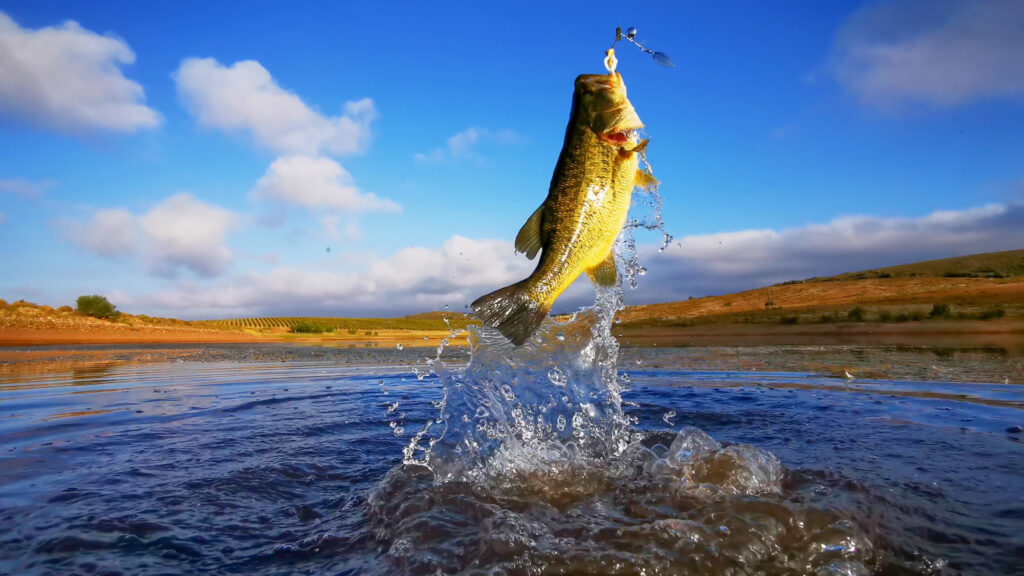
Few things in fishing beat a bass blowing up on a frog. One second
the frog is sitting on a lily pad, the next it’s gone in a swirl of
water and weeds. It’s also one of the most frustrating ways to fish,
because plenty of those blowups never turn into a fish in the boat.
The good news is that most missed frog fish come down to a few
fixable things: the wrong gear, setting the hook too fast, or fishing
the frog in the wrong spots. Here’s how to get them right.
[TREV: a quick story about your first frog fish, or the one that got
away.]
Quick picks
| Gear | What to look for | Check price |
|---|---|---|
| Hollow-body frog | Weedless, soft body, 2 upturned hooks | See on Amazon |
| Popping frog | Cupped mouth that spits water | See on Amazon |
| Frog rod | 7’ to 7’3”, heavy power, fast action | See on Amazon |
| Braided line | 50 to 65 lb braid | See on Amazon |
Where to throw a frog
A hollow-body frog is weedless, which means you can throw it where
almost nothing else will come through. That’s its whole job. Look
for:
- Lily pads. Work the frog across the pads and pause
it in every open pocket between them. - Matted grass and slop. Bass sit underneath thick
mats where it’s shady and cool, and they’ll blast up through the top for
a frog. - Edges. The outside edge of a weed bed, a pad field
or a mat is often the best spot of all. Fish it slowly. - Shade. Overhanging trees, docks and laydowns hold
bass on bright days. Skip or pitch the frog into the shade. - Open water near cover. A frog works on open water
too, especially a popping or walking frog, early and late in the
day.
When frog fishing is best
Frog fishing really turns on once the water warms past about 60°F,
and it stays good from late spring through early fall. Summer is prime
time, when the grass and pads are at their thickest.
- Low light (early morning, evening and cloudy days)
is great everywhere, including open water. - Bright, hot middays push bass deep into the
thickest cover and shade, which is exactly where a frog shines. - Fall can be excellent as bass feed heavily around
the remaining grass before it dies off.
The right gear for frog
fishing
Frog fishing is heavy-duty fishing. You’re setting the hook through a
soft plastic body and then dragging a bass, and often a clump of weeds,
out of thick cover. Light gear loses fish.
Rod: a 7’ to 7’3” casting rod in heavy power with a
fast or moderate-fast action. You need the backbone to drive the hooks
home and pull fish out of the slop.
Reel: a baitcasting reel with a fast gear ratio,
around 7:1 or higher. It picks up slack line fast on the hookset and
gets the fish moving toward you before it can bury in the weeds.
Line: 50 to 65 lb braid. Braid has no stretch, so
your hookset reaches the fish, and it slices through grass. Don’t use
mono or fluorocarbon here. Mono stretches too much for a solid hookset,
and fluorocarbon sinks and drags your frog’s nose down.
Our picks: – A hollow-body frog
like the SPRO Bronzeye or Booyah Pad Crasher is the classic all-round
choice.
Check
current price on Amazon – PowerPro Spectra in 50 or
65 lb is a long-time favorite for frogs and heavy cover.
Check
current price on Amazon
How to work a topwater frog
Walk the frog
This is the main retrieve. Cast past your target, then twitch the rod
tip down with short, sharp snaps while reeling in the slack between
twitches. Keep a little slack in the line so the frog walks side to side
instead of coming straight at you. It should look like a frog swimming
and kicking across the surface.
Pause it in the holes
Most strikes come when the frog stops. Every time it reaches an open
pocket in the pads, the edge of a mat or a shady spot, let it sit for a
few seconds. Give it a small twitch so the legs shake, then let it sit
again.
Pop it on open water
A popping frog has a cupped mouth. Short, firm twitches make it chug
and spit water, which pulls bass in from farther away. Use it along weed
edges and on open water in low light.
Drag it over the slop
On thick mats, you can’t really walk a frog. Instead, crawl it
steadily over the top and give it a pause and a shake whenever it
reaches a hole or a thin spot.
How to set the hook
(and stop missing fish)
This is where most frog fish are lost. When a bass explodes on your
frog, every instinct says to swing right away. Don’t.
- Wait until you feel the fish. A bass often blows up
on the frog without getting it in its mouth, especially in thick cover.
Pause for a second, drop your rod tip toward the fish, and wait until
you feel weight or see the line moving away. - Reel down and swing hard. Reel up the slack
quickly, then set the hook with a strong sweep up and back. - Keep the fish coming. Keep reeling and keep the rod
high so the bass’s head stays up. If it gets its head down in the weeds,
you’ll often lose it.
If the fish misses: keep working the frog in the
same spot, because a bass that misses will often hit again. If it
doesn’t come back, throw a follow-up bait such as a Texas-rigged plastic
worm or a soft stickbait right where the blowup happened.
[TREV: add your own hookset count or trick here, if you have
one.]
How to pick a frog color
Keep it simple. Bass see the frog’s belly from below against the sky,
so the belly matters more than the top.
- Sunny days and clear water: white, light gray, or
natural greens and browns. - Cloudy days, low light or stained water: black or
other dark colors, which make a strong silhouette. - Not sure? Start with black on dark days and white
on bright days.
Tune your frog before you
fish it
A few small tweaks make a big difference:
- Trim the legs. Cutting the skirt legs a little
shorter, or staggering their length, helps the frog walk better and
makes it spit water when it pauses. - Check the hooks. The hooks should sit tight against
the body so they don’t snag. If you miss a lot of fish, bend them out
very slightly. - Squeeze out the water. Hollow frogs take on water
as you fish them, which makes them sit low and walk badly. Squeeze it
out every few casts.
Common frog fishing mistakes
- Setting the hook too fast. Wait to feel the
fish. - Using gear that’s too light. Heavy rod, fast reel
and heavy braid are not optional. - Fishing it too fast. Pause it in the holes and
along edges, because that’s when bass strike. - Skipping the edges. Fish the edges of cover slowly
before you throw into the middle of it. - Giving up after a miss. Throw back to the same
spot, or follow up with a plastic worm.
Final thoughts
Frog fishing is about patience. Throw it into the thick stuff, work
it slowly, and wait to feel the fish before you swing. Get those three
things right and you’ll land a lot more of those blowups.
New to bass fishing? Start with our beginner tackle
checklist, and check out our guide to the best fishing line for bass to
pick the right braid.