This post contains affiliate links. As an Amazon Associate I earn
from qualifying purchases, at no extra cost to you. Learn more.
If you’ve watched any bass fishing lately, you’ve probably seen
anglers catching fish on what looks like a spiky little rubber ball.
That’s an urchin bait, and it has quickly become one of the most
talked-about finesse lures in bass fishing. Pros have won tournaments on
them, tackle shops sell out of them, and copies of the original are
everywhere.
Here’s what urchin baits are, which ones are worth buying, and how to
rig and fish them.
[TREV: add your first impression of urchin baits, or a fish you
caught on one.]
What is an urchin bait?
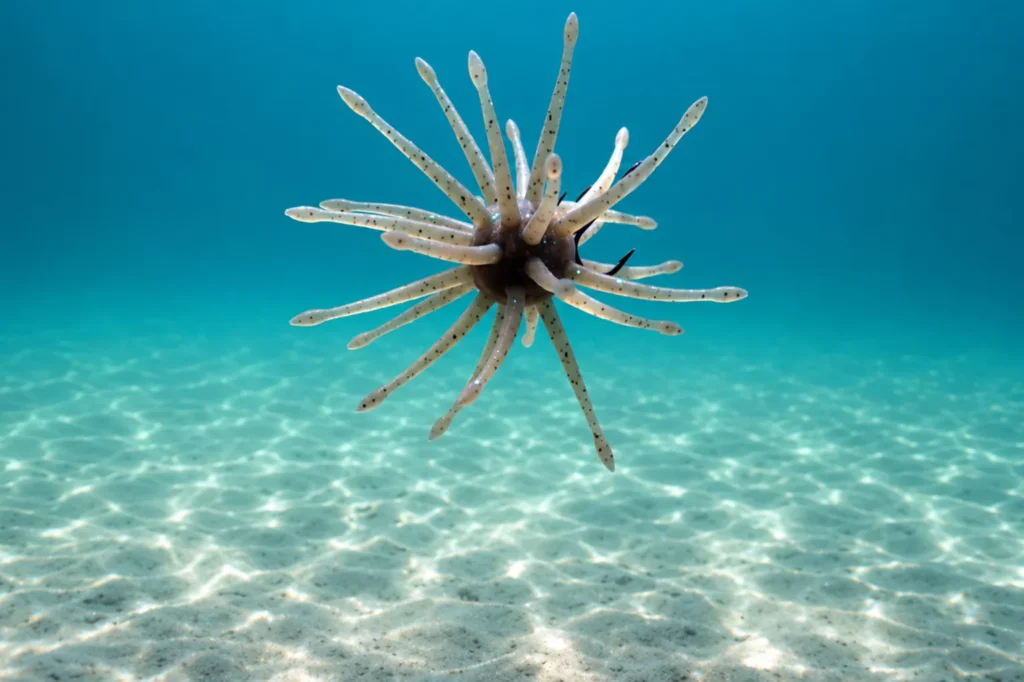
An urchin bait is a small soft plastic ball covered in short, thin
tentacles, so it looks a bit like a sea urchin. Most are made from soft,
stretchy TPE plastic rather than regular soft plastic.
The magic is in the tentacles. They pulse and quiver with the
smallest movement, even when the bait is sitting still. Nobody is
completely sure why bass love them. Some anglers think they look like a
tiny ball of baitfish, others think bass simply haven’t seen anything
like them before. Either way, they catch fish, especially pressured fish
that ignore more common baits.
The bait that started the craze is the Hideup Coike
from Japan. Several big tournaments have been won on the Coike or a copy
of it, which is a big part of why urchin baits blew up.
Quick picks: the best urchin
baits
| Urchin bait | Sizes | Best for | Check price |
|---|---|---|---|
| Hideup Coike | 13mm, 17mm, Fullcast | The original, all-round favorite | See on Amazon |
| Yamamoto Uni | Small | Small profile, slow pulsing fall | See on Amazon |
| Davis Urchin Creature | 13mm, 17mm | Designed by Elite Series pro Will Davis Jr. | See on Amazon |
| Randamu Fuzzy Ballz | 20mm | Drop shot, Jika and Neko rigs | See on Amazon |
| Budget urchin baits | Various | Trying the technique for less | See on Amazon |
The best urchin baits,
reviewed
Hideup Coike: the original
The Coike is the bait everyone is copying. It comes in a small 13mm,
a mid-size 17mm and a bigger Fullcast version for casting farther and
fishing heavier rigs. If you only buy one urchin bait, start with a 13mm
or 17mm Coike in a natural color. They’re popular and can be hard to
find in stock, so grab them when you see them.
Check
current price on Amazon
Yamamoto Uni: best small
profile
Yamamoto is one of the most trusted soft plastic brands in bass
fishing. The Uni is a compact urchin with tentacles that pulse as it
glides down, which makes it a good choice on a slow-falling Neko rig or
a drop shot for finicky fish.
Check
current price on Amazon
Davis Urchin
Creature: a pro-designed option
Designed by Bassmaster Elite Series angler Will Davis Jr., the Urchin
Creature comes in 13mm and 17mm sizes, so it covers the same range as
the Coike.
Check
current price on Amazon
Randamu Fuzzy Ballz:
built for finesse rigs
The Fuzzy Ballz is a 20mm urchin made for drop shot, Jika and Neko
rigs. It’s a good option when you want a slightly bigger bait on light
tackle.
Check
current price on Amazon
Budget urchin baits
Lots of cheaper urchin baits are sold on Amazon in different sizes
and colors. Quality varies, but they’re a low-cost way to see if the
technique works on your lake before you spend more on name brands.
Check
current price on Amazon
Which size urchin bait
should you buy?
- 13mm: the best size to start with. Easiest to fish
on light spinning gear and great for pressured fish. - 17mm: a little bigger and easier to cast, with more
water push. A good all-round size. - Larger baits (20mm and up, Coike Fullcast): better
for casting distance, deeper water and bigger fish, and they handle
heavier weights and hooks.
How to rig an urchin bait
Urchin baits don’t come with a “right” way to rig them, and anglers
are still experimenting. These are the most common setups.
Drop shot
The drop shot is the easiest way to start.
- Tie a drop shot hook with a Palomar knot, leaving 12 to 18 inches of
tag line below it. - Push the hook through the center of the bait so the hook point sits
well inside or just through the core. The core is thick, so push it deep
past the bend of the hook, or the bait can spin off. - Clip a light drop shot weight to the tag end.
Fish it with short shakes and long pauses. The tentacles keep moving
even when you hold the rod still.
Neko rig
The Neko rig lets the bait glide down slowly with its tentacles
pulsing, which is often when bass eat it.
- Push a small nail (Neko) weight into one side of the bait.
- Hook it through the body with a small hook, often a treble or double
hook, with the points facing up. - Use a bait keeper (a small plastic stopper) so the bait doesn’t tear
off the hook.
Cast it out, let it fall on a slack line, then shake it lightly,
pause and give it one or two sharper twitches before letting it fall
again.
Weighted hook or insert
weight
For larger urchins, some anglers use a wide-gap hook with a small
weight inserted into the bait. It’s a simple way to fish it around cover
with fewer snags.
Jika rig
A Jika rig has the weight hanging right below the hook. It’s a good
choice when you want the bait to sink faster or when you’re fishing
around light cover.
[TREV: add the rig that’s worked best for you once you’ve tried a
few.]
The right gear for urchin
baits
Urchins are finesse baits, so light spinning gear works best.
- Rod: a 6’10” to 7’2” spinning rod in medium-light
or medium power with a fast tip. - Reel: a 2500 size spinning reel with a smooth
drag. - Line: 6 to 10 lb fluorocarbon, or 10 to 15 lb braid
with a 6 to 10 lb fluorocarbon leader. - Terminal tackle: drop shot hooks, small treble or
double hooks, Neko nail weights, drop shot weights and bait
keepers.
Our picks: – Seaguar fluorocarbon
in 6 to 10 lb test is a trusted choice for finesse rigs and leaders.
Check
current price on Amazon – Neko weights in 1/32 to
1/8 oz cover most situations.
Check
current price on Amazon – Drop shot hooks and
weights to get started on the easiest rig.
Check
current price on Amazon
New to spinning gear? See our guide to the best spinning combos for
beginners.
Tips for catching
more bass on urchin baits
- Do less. The tentacles do the work. Long pauses and
small shakes catch more fish than hard twitches. - Watch the fall. Many bites happen as the bait
sinks, so watch your line and set the hook if it jumps or moves
sideways. - Pick clear water. Urchins tend to work best in
clearer water, where bass can see the tentacles moving. - Match the weight to the depth. Use only as much
weight as you need to reach the fish, so the bait falls slowly. - Store them separately. TPE urchins can react with
regular soft plastics and melt, so keep them in their own box and out of
direct sun.
Urchin bait FAQ
What fish can you catch on an urchin bait? They’re
mostly used for largemouth, smallmouth and spotted bass, but panfish and
other species will eat smaller urchins too.
What color urchin bait is best? Start with natural
colors like green pumpkin, brown or smoke in clear water. Try darker
colors like black in stained water or low light.
Are urchin baits legal in tournaments? Yes, they’re
regular soft plastic lures. As always, check your own tournament’s
rules.
Why are urchin baits so popular? They catch
pressured bass that have seen every other finesse bait, and several
high-profile tournament wins on the Hideup Coike put them in the
spotlight.
Final thoughts
Urchin baits are new, a little weird, and very effective, especially
on tough days when bass won’t touch anything else. Start with a 13mm or
17mm bait on a drop shot, fish it slowly, and expand to Neko and Jika
rigs once you get the feel for it.
Just getting into bass fishing? Start with our beginner tackle checklist
and our guide to the best fishing
line for bass.